Field Notes · Garden Route Hiking
Salt in the Beard, Smoke in the Hair: Five Days on the Otter Trail
Five days hiking the Otter Trail, South Africa’s oldest multi-day hike, along the wild Garden Route coast.
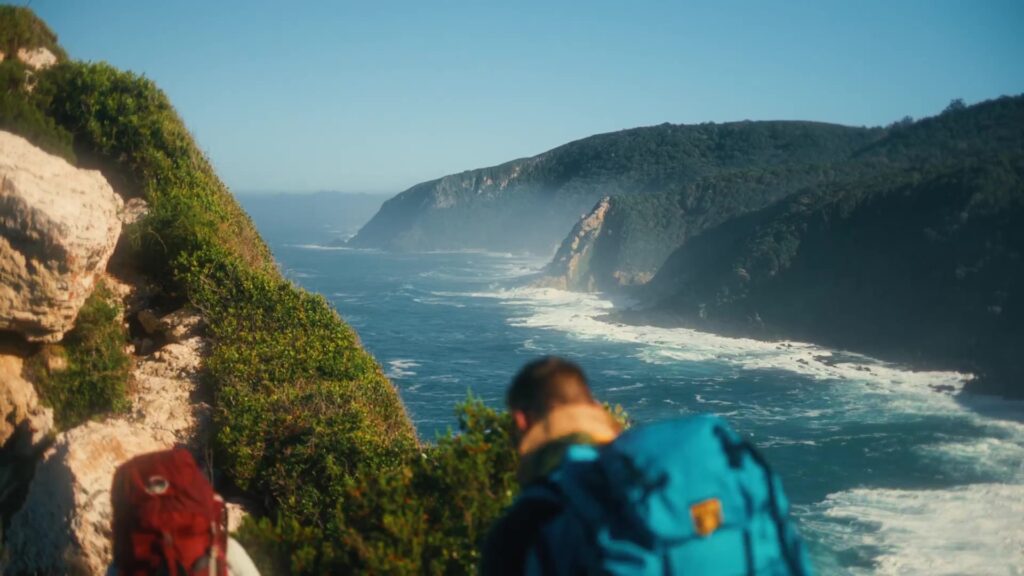
18:37. We have just come out of Bloukrans, the notorious river crossing everyone warns you about, the one where bad planning and worse timing have taken souls from the trail. The shivers of adrenaline and exhilaration coursing through my body make me forget the sensation of my clothing sticking to wet, cold, salty skin. My headlamp catches a cliff edge as the last flickers of the crimson sunset sink beneath the Indian Ocean. My ears fill with the one-note argument of white water violently exploding and retreating on the rocks below. Someone spots a leopard track in the sand. It’s dark now and the hut is still a couple of hours away. We march on — six torches bobbing and scanning the thick forest ahead, humming “Children of the Grave” as we ascend yet another snaking path into the night.
Danger and beauty have always arrived together on this coast, which is the Otter Trail in a short sentence: somehow exactly right.
Who’s telling you this
I’m one-sixth of the group that walked this breathtaking stretch of coastline last August in 2025. The plan was simple: get the mates together and walk South Africa’s oldest and most iconic multi-day hike. Each one of us was ready for this adventure, we were frothing. We knew we’d take the longer, more scenic routes, swim at secluded beaches and rockpools, and conquer any challenge as a team. Our crew had dynamic roles and backgrounds: filmmakers, fire masters, braai masters, coffee connoisseurs, conservationists, thrill-seekers, over-planners, jokesters, snorers. None of us professional hikers, all of us far too confident to think otherwise.
Hiking the Otter Trail in winter
August sits at the tail end of a Garden Route winter, and the Tsitsikamma wears it well. Cold mornings, fog sitting low over the fynbos and lush Afrotemperate forest until the sun finally burns through around 9am. The trail is a rope of root and brown earth, pinched between dense milkwood on one side and a straight drop-off into the sea on the other. In places, the path is swallowed by the green inferno, crossing through areas where you half expect a dinosaur at the next river bend. Then, the forest lets go and the coast opens: folded quartzite tilted at impossible angles, coloured rust and grey and pale gold, stacked like badly shelved books; rivers stained tea-brown by the fynbos, bleeding into turquoise where they meet the surf. You smell salt and fynbos before you see the canopy opening to an inviting strip of ocean.
The journey, day by day
Beginning. Night one, Ngubu Hut, in high spirits. We ate through most of our carefully rationed food within two hours, and agreed unanimously that we needed more wood, because the fire needed to be bigger. This became the trip’s running competition: who could drag back the most absurdly oversized piece of wood each evening. Firewood is provided at each hut. It was not enough for us. We also learned that a resupply service exists for people who badly underestimate their fuel requirements, which led to further deliberation and some executive decision-making around the fire.
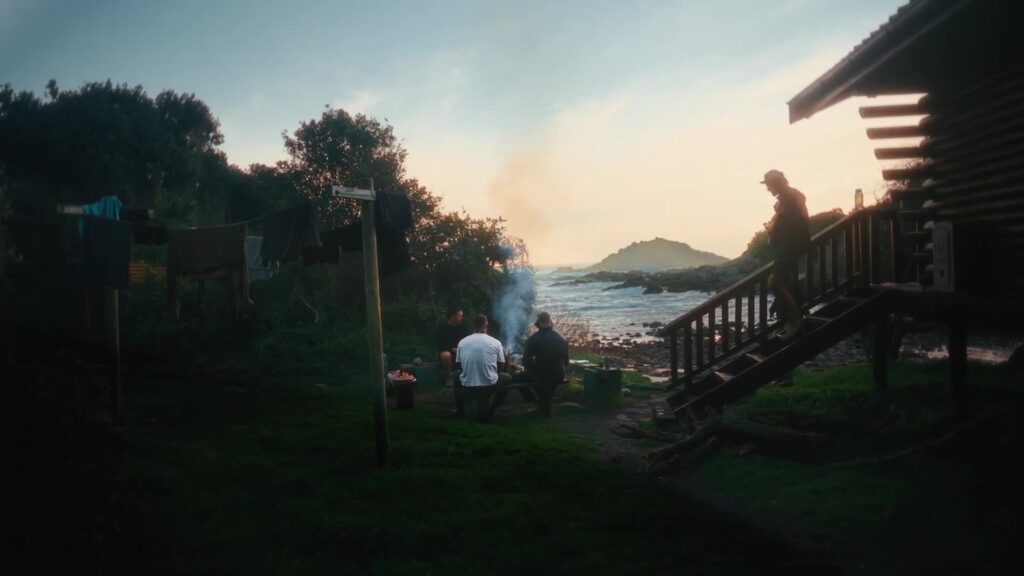
Middle. At Scott Hut on night two we hung socks and trousers around a fire built entirely from beach salvage as we watched the sun set over the Geelhoutbos River Mouth. The Cape genets arrived after dark and an undignified standoff ensued. Bold little bandits, entirely unbothered by us. One of our group had a (Steve) Irwin-moment and even went fully prone on the grass to get eye-level with the furry little carnivore. In all fairness to the genets, the emergency drop we called in that morning was already sizzling on the coals by then. We learnt our lesson thoroughly. The lamb chops were exceptional.
High point. Day three stays with me. The trail climbs a long ridge and, just as your legs start asking questions, opens onto a bay with the most scenic Oakhurst Hut sitting right on the water below. Nobody said much. We stood there a minute with packs still on and just let the wind do its thing. It is the kind of view a photo does not quite hold. Best believe, we all gave it a fair go.
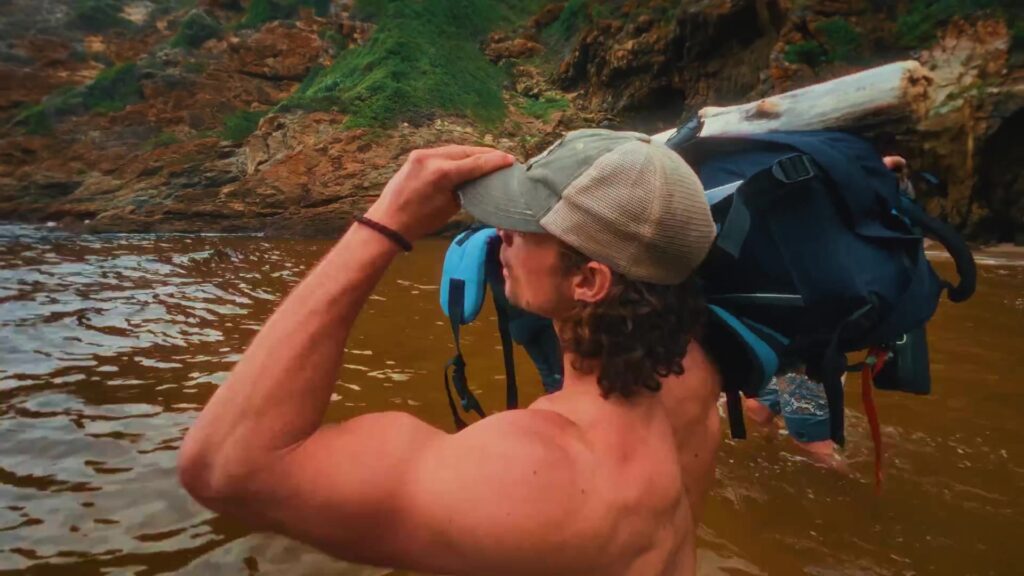
The long one. Day four was the reckoning: the Bloukrans crossing, folded into the longest walking day on the trail. We decided not to rush and to time low tide later in the day. A principled position right up until the sun started dropping and the river was still running properly. Chest-deep in places. Packs held overhead. We waded in a slow chain, watching each other less out of sentiment than surveying. A sinking bloke meant the line had to adjust course. One by one we reached the far bank and picked our way, ungracefully, over the knife-edged shelf back to level ground.
We walked the last stretch into the night and reached Andre Hut well after dark, legs entirely gone, and did the only sensible thing: built the biggest fire of the trip, cracked a cold one, and sat. If anything, that’s the moment I’d bottle if I could. Bone-tired, salt-crusted, surrounded by people you trust with your life, waves turning over on the pebbled beach under a starlit sky, listening to Landon McNamara’s Hawaiian reggae talk us into the evening.
Return. On the final day we walked out the last 10km in the rain, wrestling with the odd double-mindedness of wanting a hot shower while resenting every step that brought us closer to one.
Why this matters to us
TRUTH Travel does not exist to sand the rough edges off a trip like this. The cold rivers, the food shortages, the near-misses, the heavy hikes. This is just the Otter doing its job. At TRUTH, we do these Garden Route trips ourselves — with our own mates, not just clients — because that’s the only way to really know this coast. What we do is get people to the start line: permits, logistics, transfers, tide tables and local knowledge that keeps the adventure rolling. The genets, the fire, the crossing, the view from that ridge. That part is yours to earn.
Field notes: planning your Otter Trail hike
- Book absurdly early. Bookings open 11 months ahead. Secure your huts and permits well in advance, as SANParks caps numbers daily and slots go early.
- Pack more food than feels reasonable. Ask us how we know.
- Time the Bloukrans crossing around low tide if you can, and keep anything you can’t afford to lose in a proper dry bag.
- Winter on the Garden Route is cold and often damp, so a good base layer beats an extra t-shirt.
- Bring a headlamp with real battery life; you’ll use it in both directions more than you’d expect.
Reflection
Five days, four huts, one profoundly sore group of friends, and not one of us would trade it. There is a particular kind of “tired” the Otter hands you: earned, clean, the sort that makes food taste better and a fire feel like the only thing in the world. There is also that complex feeling of duality when you’re on the Otter. Completely at peace, and entirely at the mercy of a coastal wilderness that has no idea or care that you exist. If you’ve been looking for an excuse to “earn” one of South Africa’s most beautiful hikes, this might be it. Because if it had been easy, I probably would not have bothered writing about it.
~ Willem de Klerk
Thinking about the Otter Trail?
We do these Garden Route trips ourselves. Tell us when, and we will get you to the start line. Permits, huts, transfers, tide tables and local knowledge.